Menopause Fatigue: Why You’re Exhausted and What Helps
Menopause fatigue is a deep, persistent tiredness that sleep does not fix, and it usually has identifiable causes: shifting hormones, broken sleep, heavy bleeding and stress, sometimes with a separate medical problem layered on top. The useful move is to find which of those apply to you and treat them one by one. If you live in San Antonio and suspect hormones are part of the picture, our hormone therapy with Biote is where we begin that conversation.
TL;DR
- Fatigue is one of the most reported symptoms of the menopause transition: in a global study, 83% of women over 35 reported fatigue, and 93% of those in perimenopause did.
- The usual drivers are hormone changes, night sweats and hot flashes that fragment sleep, heavy or prolonged bleeding, and stress. Thyroid problems, sleep apnea, depression and medications can mimic or add to it.
- Brain fog and anxiety often travel with fatigue. Exercise, sleep habits, cognitive behavioral therapy (CBT) and mindfulness have the strongest guideline support for them.
- Hormone therapy is an established option for menopausal symptoms in healthy women under 60 or within 10 years of menopause, and it should be a clinician’s decision based on your history.
- Persistent confusion, worsening memory or thoughts of self-harm need prompt medical care.
Table of Contents
- What menopause fatigue actually is
- Why you are so tired: the main causes
- Brain fog and anxiety: how they connect to the tiredness
- What helps: a practical order of operations
- Why so many women go untreated
- A worked example of putting it together
- Where Luna fits
- FAQ
- Sources
What menopause fatigue actually is
Perimenopause, the transition before your periods stop, typically begins in the mid-to-late 40s. Menopause is defined as 12 months without a period. Fatigue can show up anywhere along that path, from mild to severe, and Medical News Today summarizes a 300-woman study in which fatigue affected 19.7% of women before perimenopause, 46.5% during perimenopause and 85.3% after menopause.
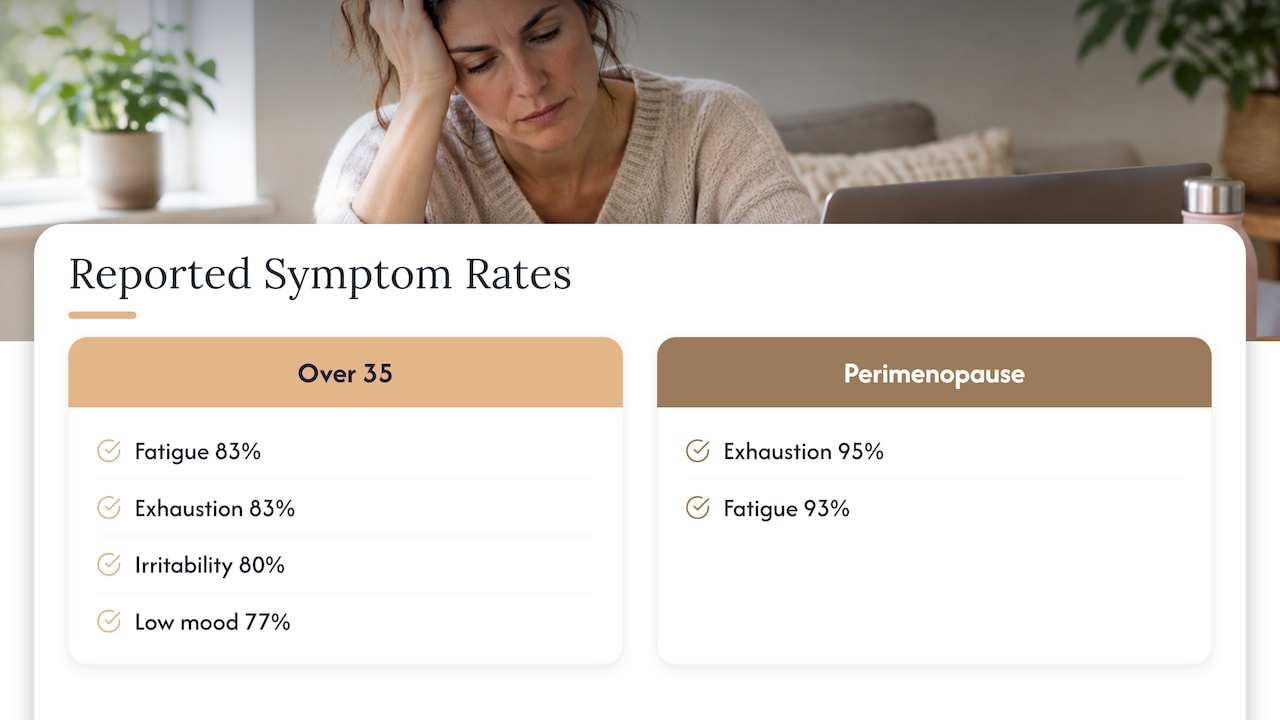
The Mayo Clinic’s 2026 report on a study of 17,494 people in 158 countries found that among participants over 35, the most common perimenopause symptoms were fatigue (83%), exhaustion (83%), irritability (80%), low mood (77%), sleep problems (76%) and anxiety (75%). Among those in perimenopause, 95% reported exhaustion and 93% fatigue.
That overlap matters. Fatigue, brain fog and anxiety rarely arrive alone, and treating the tiredness often changes how the other two feel.
Why you are so tired: the main causes
Hormone shifts
Fluctuating estrogen and progesterone affect more than periods. Mayo Clinic’s first study author, Mary Hedges, M.D., notes that hormone changes affect the body’s natural rhythms and restorative sleep, while mood changes can be influenced by hormones, inflammation and diet. In plain terms, the swings can disrupt the sleep that normally recharges you, and that is a large part of why the tiredness feels so different from a busy week.
Night sweats and broken sleep
Hot flashes and night sweats wake you, often without you remembering it. Medical News Today lists lower-quality sleep from hot flashes and night sweats among the main routes to menopause fatigue. You can sleep eight hours in bed and still wake up unrefreshed.
Heavy or prolonged bleeding
This cause gets overlooked. A 2025 analysis of the SWAN study, which followed 2,329 women through midlife, found that three or more heavy-bleeding episodes in six months were associated with feeling tired (odds ratio 1.62) and worn out (1.44). Three or more prolonged-bleeding episodes were linked to lower odds of feeling full of pep. If your cycles have become heavy or long, tell your clinician. It is a fixable contributor, not something to push through.
Stress, mood and life load
Stress and fatigue feed each other during the transition, and midlife often brings peak work and family demands. If that sounds like your calendar, our piece on a wellness routine that fits a busy professional’s week is a practical companion.
Other conditions that look like menopause
ACOG’s new guideline, as reported by LTC News, notes that sleep apnea, thyroid disorders, depression and medication effects can produce symptoms similar to menopause. Mayo Clinic says tests usually are not needed to diagnose menopause, but providers may order blood tests for FSH and estradiol, and for TSH because an overactive thyroid can cause menopause-like symptoms. Home FSH urine tests cannot reliably tell you whether you are in menopause, because FSH rises and falls across the cycle.
Brain fog and anxiety: how they connect to the tiredness
The Office on Women’s Health lists brain fog and memory changes, mood changes, anxiety and sleep problems among common perimenopause symptoms and notes they often improve after menopause. Professor Martha Hickey of the University of Melbourne told LTC News that many women experience some degree of brain fog in the transition, though long-term data on how it changes are still lacking.
What the 2026 guidelines say is practical:
- The VA/DOD guideline states that for brain fog and poor memory the evidence is limited, but CBT and physical exercise may have a small positive effect on menopause-related cognitive symptoms.
- The same guideline strongly recommends CBT and mindfulness-based stress reduction for depressive and anxiety symptoms during perimenopause and menopause.
- Hormone therapy is not used to treat brain fog or memory problems alone. If your main complaint is cognitive, that points toward sleep, exercise and behavioral care first, and toward an evaluation if symptoms are escalating.
When to get evaluated promptly
Persistent confusion, worsening memory or difficulty completing familiar tasks warrant a medical evaluation, per the ACOG guideline reporting above. Women with major depression should receive treatment for depression itself. For a medical emergency, call 911 or go to the emergency room. If you have thoughts of self-harm, the 988 Suicide & Crisis Lifeline is available, as the Office on Women’s Health notes.
What helps: a practical order of operations
1. Rule out the look-alikes
Start with a visit to your primary care clinician or gynecologist, especially if fatigue is severe, sudden or comes with heavy bleeding, snoring, weight change or low mood. Thyroid and sleep apnea are common, treatable and easy to miss.
2. Protect your sleep
Mayo Clinic’s self-care advice for menopause includes skipping caffeine and alcohol near bedtime and exercising during the day, along with a balanced diet, not smoking and regular exercise on most days. Cooling the bedroom and keeping a steady wake time help the same way.
3. Move, with a plan
Exercise is the one intervention that shows up in nearly every guideline for fatigue, mood and cognition. The trick is consistency you can sustain. Strength work in particular matters in midlife, and a structured, one-on-one program removes the guesswork about how much to do on low-energy days. Mayo also points out that managing weight matters, since obesity is linked to more and worse hot flashes.
4. Address stress and anxiety directly
CBT and mindfulness-based stress reduction are the best-supported tools for anxiety in this stage. They work on the same loop that keeps you awake at 3 a.m.
5. Consider hormone therapy if hot flashes and night sweats are driving the exhaustion
Mayo Clinic says estrogen therapy works best for hot flashes and eases other symptoms, and is best started in people younger than 60 or within 10 years of menopause onset. A peer-reviewed review by Mayo Clinic authors reports that menopausal hormone therapy reduces hot flash frequency and intensity by nearly 90%, usually within a month, and that benefits typically outweigh risks for healthy symptomatic women under 60 and within 10 years of final menses. When night sweats are what is waking you, calming them can give your sleep back, and energy often follows.
Safe use matters. Estrogen needs a progestin if you still have a uterus, and long-term therapy may carry heart disease and breast cancer risks, per Mayo Clinic. That is why it is prescribed against your personal and family history, not taken off a checklist. Our guides on perimenopause hormone therapy and the signs of hormone imbalance explain who it helps and how long it is typically used.
Nonhormonal options exist too. A Washington state 2026 menopause report lists CBT, clinical hypnosis, SSRIs and SNRIs, gabapentin, fezolinetant, elinzanetant and oxybutynin, and the Mayo-authored review notes low-dose paroxetine is the only nonhormone treatment FDA-approved for hot flashes. These are prescription decisions for your clinician.
6. Supplements: ask before you buy
People often ask about the best vitamin for menopause fatigue. No single vitamin is established as a fix. Mayo Clinic suggests asking your provider about calcium or vitamin D supplements as part of bone care, so bring your supplement list to your appointment rather than guessing.
Why so many women go untreated
The Washington state report finds that symptoms are often under-recognized and undocumented, that almost 9 in 10 women do not seek medical care for menopause symptoms partly because they do not know effective treatments exist, and that as of 2022 only about 1 in 3 OB/GYN residency programs reported a specific menopause curriculum. Up to 80% of people report symptoms, and frequent hot flashes last a median of an estimated 7.4 years. You do not have to wait it out.
A worked example of putting it together
Imagine a 49-year-old professional who wakes at 3 a.m. soaked in sweat, drags through afternoons, loses words in meetings and feels a new edge of anxiety. A sensible plan: a visit to rule out thyroid problems and sleep apnea and to discuss her bleeding pattern; a bedroom and caffeine reset; three weekly strength sessions; a stress-management practice such as mindfulness; and a conversation about hormone therapy because night sweats are the clear trigger. Each step addresses one cause, and the order keeps her from paying for a treatment that does not match the problem.
Where Luna fits
We are a San Antonio clinic that combines aesthetic medicine with wellness care, and we are co-located with a trusted OBGYN practice. For women whose fatigue tracks with hormone changes, we offer hormone therapy with Biote and a hormonal imbalance consultation. We also offer medical weight loss and personalized one-on-one personal training, so the sleep, movement and weight pieces of your plan can sit under one roof.

If you are tired of being tired, book a consultation through Luna Regenerative Wellness and bring your symptom timeline, your bleeding pattern and your medication list.
Our perspective
We meet women who have been told their exhaustion is just stress or just age. Our view is that menopause fatigue deserves the same careful work-up as any symptom that wrecks your days: look at the hormones, the sleep, the bleeding, the stress and the movement together, not in isolation.
That is why our model joins medical care and wellness strategy in one place, and why being co-located with a trusted OBGYN practice matters to us. Hormone therapy with Biote is built into that approach for women who are candidates, alongside the lifestyle foundations that every guideline puts first.
Hormone balance, strength, sleep and weight are linked. When they are addressed as a plan instead of separate fixes, patients have a clearer path to feeling like themselves again.
Luna Regenerative Wellness
FAQ
How long does menopause fatigue last?
It varies. Fatigue is most often reported during perimenopause and in the years after menopause. Many symptoms ease after menopause, according to the Office on Women’s Health, and treating the causes, such as night sweats or heavy bleeding, can shorten the rough stretch.
Can hormone therapy help menopause fatigue?
It can help when fatigue is driven by hot flashes and night sweats that disrupt sleep, since therapy reduces those symptoms. It is not used for brain fog or memory problems alone. Eligibility depends on your age, time since menopause and health history, so a clinician should review it with you.
Is brain fog in menopause a sign of dementia?
Mild forgetfulness and slowed thinking are common in the transition and often improve afterward. Persistent confusion, worsening memory or trouble with familiar tasks should be evaluated by a medical professional promptly.
What is the best vitamin for menopause fatigue?
No single vitamin is established as a treatment. Ask your provider whether your diet, bone health or labs justify calcium or vitamin D, and have thyroid and other causes checked first.
When should I see a doctor about fatigue?
See a clinician if it is severe, sudden or lasting, if bleeding is heavy or prolonged, or if you have loud snoring, low mood or anxiety that interferes with life. Go to the emergency room for an emergency, and use the 988 Suicide & Crisis Lifeline for thoughts of self-harm.
Sources
- Menopause fatigue: Causes, treatment, and supplements, Medical News Today
- Global study on perimenopause expectations and experience, Mayo Clinic News Network
- Abnormal uterine bleeding and fatigue, SWAN study, PubMed
- Menopause symptoms and relief, Office on Women’s Health
- Menopause diagnosis and treatment, Mayo Clinic
- New menopause guidelines, LTC News
- VA/DOD Clinical Practice Guideline for Menopause, 2026
- Perimenopause and Menopause 2026, Washington state report
- Menopausal hormone therapy review, Dove Press