Personal training helps with weight loss because it puts the three things that drive results in one place: supervised strength work, a plan you can actually follow, and someone who sees whether you showed up. The research points the same way. Programs that pair structured exercise with eating changes, include resistance training and keep regular contact beat going it alone. At Luna Regenerative Wellness in San Antonio, one-on-one personal training sits inside a clinic that also offers medical weight loss, so your training and your health picture can be considered together.
TL;DR
- Exercise plus diet changes outperform either one alone, and the most lasting results come from programs that run 6 to 12 months or longer with frequent, supervised contact.
- Strength training combined with cardio produced the biggest fat loss in a 22-week trial, so a good plan is not just “more cardio.”
- A safe pace is about 1 to 2 pounds per week. Faster loss has no proven long-term advantage.
- U.S. trainers typically charge $20 to $100 an hour depending on location, experience and session type.
- If you have a medical condition or a lot of weight to lose, get your provider’s go-ahead first, then start with simple, gradual activity.
Table of Contents
- Why a trainer makes a difference
- What a weight-loss training program should include
- A safe pace for weight loss
- Starting safely if you are out of shape or have a lot to lose
- What to look for in a trainer
- What personal training costs
- How to tell it is working
- Where Luna fits
- Our perspective
- FAQ
- Sources
Why a trainer makes a difference
Most people do not fail at weight loss for lack of information. They fail because a plan that looks good on paper falls apart in week three. A trainer closes that gap in a few specific ways.
Structure and accountability. A 2026 overview of 32 systematic reviews found that combined physical activity and diet programs generally beat diet-only or exercise-only approaches for weight, BMI, waist circumference and fat mass in adults. The most durable effects came from programs lasting 6 to 12 months or longer, with frequent structured contact and supervised exercise that included resistance work. That description reads almost like a job description for a personal trainer.
Confidence that carries over to eating. In a field study of obese adults, 26 weeks of supported exercise improved self-efficacy (your belief that you can do it), self-regulation and mood, along with exercise, fruit and vegetable intake, weight and waist circumference. Better exercise self-regulation was linked to more controlled eating. In plain terms: when you learn that you can show up and finish a hard session, it gets easier to make a better choice at dinner.
Supervision that improves results. In a 2025 randomized trial of 40 adults with obesity, 12 weeks of moderate-intensity resistance training three times a week under professional supervision, added to a calorie-restricted diet, produced significantly greater improvements in body weight, waist circumference, sleep quality and fatigue than diet alone.
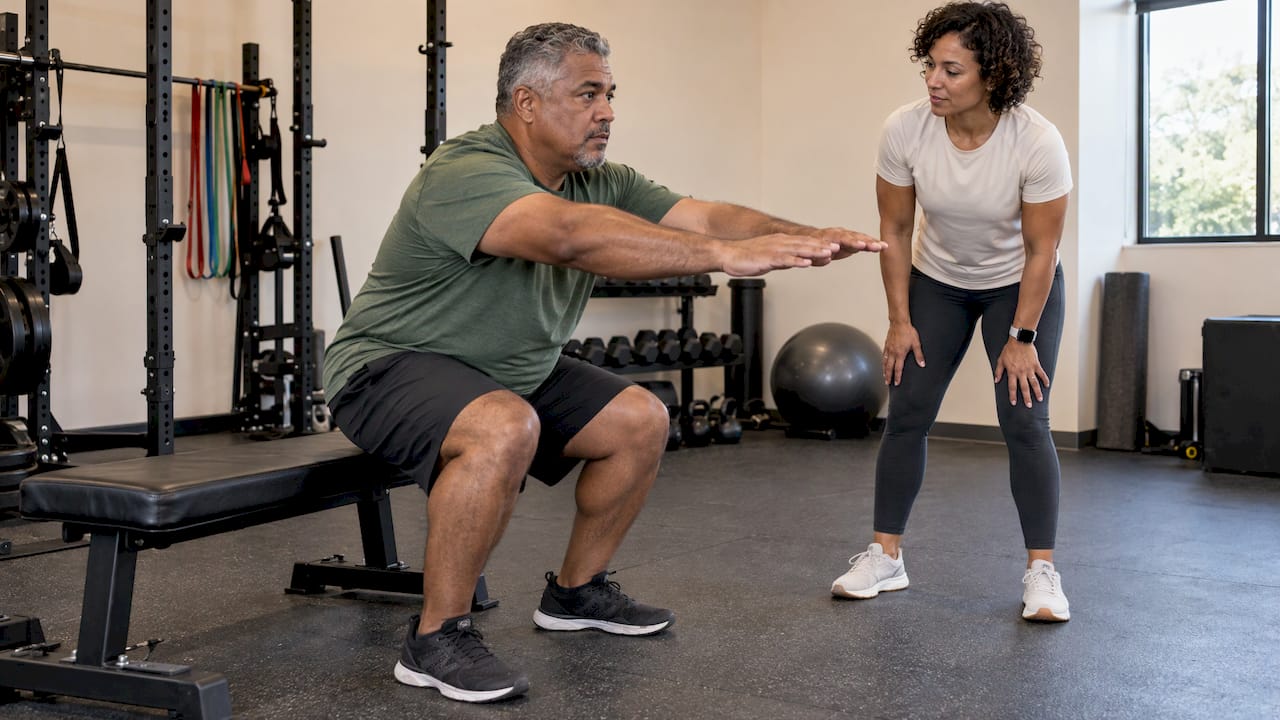
None of this means a trainer burns the fat for you. It means the habits that do the work are easier to build with someone planning, adjusting and watching your form.
What a weight-loss training program should include
A personal trainer’s role is to assess your fitness, help build a safe exercise program and set realistic goals, according to MedlinePlus, the National Library of Medicine’s patient resource. The same page draws a clear line: specific nutrition advice belongs to your provider or a dietitian, and trainers should not give medical advice, override your provider’s exercise limits, or prescribe or sell supplements.
In practice, a solid program for weight loss has these parts:
- A starting assessment. Your current fitness, injuries, joint limits and schedule decide where session one begins.
- A written goal with a timeline. Realistic and measurable, such as an inch off your waist or three sessions a week for 12 weeks, not a vague “get in shape.”
- Resistance training as the backbone. Squats, hinges, presses and rows, scaled to you.
- Cardio you will do. Walking, cycling or intervals, added on top.
- A plan for the other 160 hours of the week. Sleep, daily steps and an eating approach agreed with your provider or dietitian.
- Regular reviews. Adjust load, volume and goals as your body changes.
Why strength and cardio together
The PRONAF trial followed 84 overweight adults for 22 weeks. The group doing strength plus endurance training with an individualized lower-calorie diet lost the most: 8.5 kg of body weight and 6.74% of fat mass. Strength-only lost 4.24% of fat mass and endurance-only 4.74%. Adherence was about 92% and there were no adverse events.
The takeaway for you: a trainer who blends both is doing what the evidence supports. If you want to see how the two compare in everyday terms, our guide to strength training vs. cardio walks through it, and our 8-week beginner strength plan shows what a first block can look like.
A safe pace for weight loss
The American College of Sports Medicine (ACSM) position paper on weight loss recommends an energy deficit of 500 to 1,000 calories a day for about 1 to 2 pounds of loss per week, and says there is no evidence that faster early loss improves long-term outcomes. It also suggests building toward at least 150 minutes of moderate exercise per week and, when possible, more than 200.
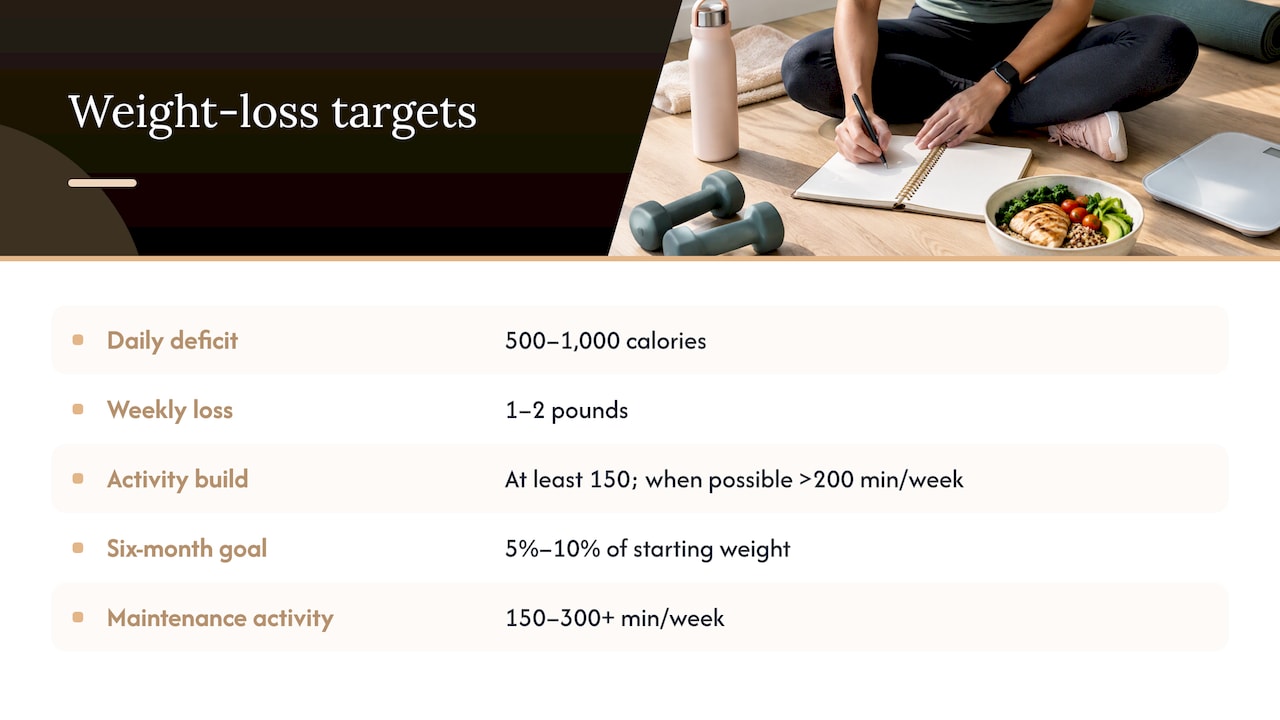
The National Institute of Diabetes and Digestive and Kidney Diseases (NIDDK) sets an initial goal of 5% to 10% of your starting weight within 6 months, about 10 pounds for a 200-pound person. To keep weight off, it recommends 150 to 300 minutes or more of activity per week and weighing in at least weekly.
A worked example: a 200-pound client aiming for 10 pounds at roughly 1 pound per week would be on track in about 10 weeks, well inside the 6-month window. Slower than you hoped? That is the pace the evidence favors.
Starting safely if you are out of shape or have a lot to lose
Start with your doctor if you have heart disease, high blood pressure, diabetes, joint problems or any symptoms with exertion. A 2022 clinical guideline on overweight and obesity advises that people with very severe obesity begin with simple activities that can be gradually intensified, such as slow walking, water aerobics or chair yoga. It also says injury risk and a safe environment should be assessed before high-intensity exercise, with exercise testing considered based on age, symptoms and risk factors. The same guideline notes that even a sustained 3% to 5% weight loss meaningfully reduces diabetes risk.
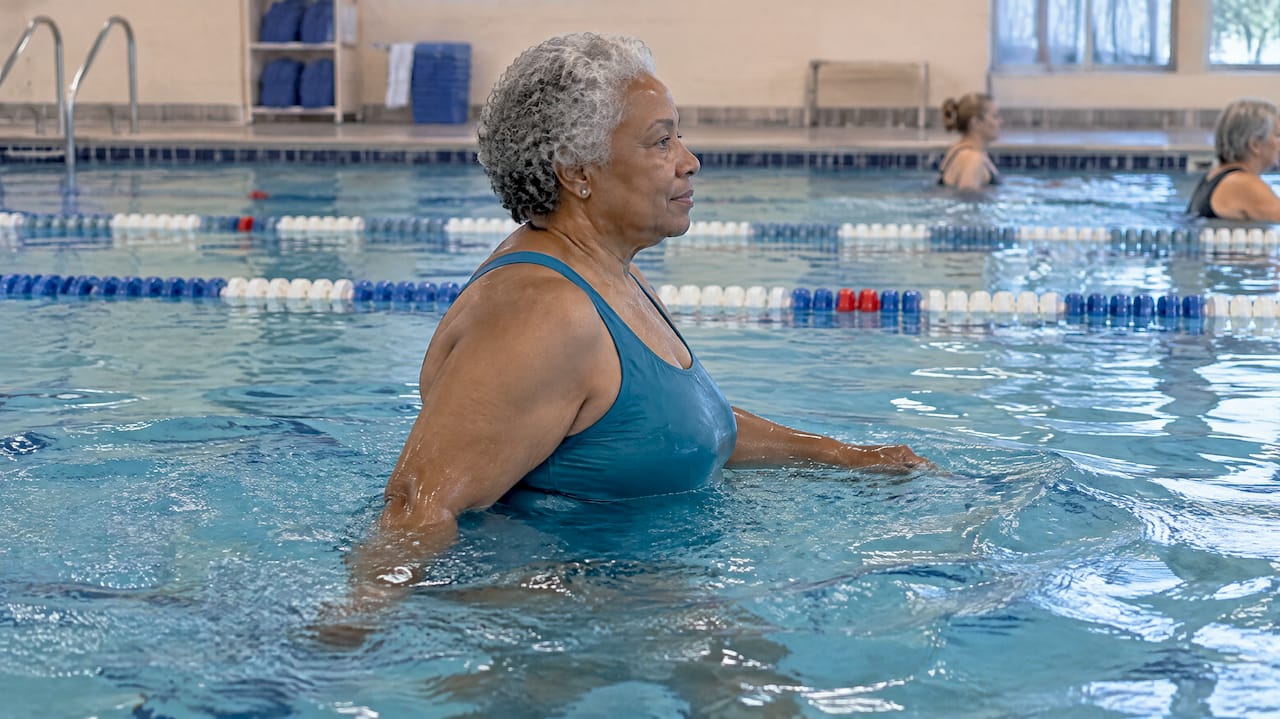
That is exactly where one-on-one sessions earn their keep. Nobody is watching a class and guessing whether you are okay; the whole session is built around you, your joints and your energy that day.
Sleep and stress also shape how consistent you can be. Some people add relaxation work alongside training, such as plantar reflexology sessions, to unwind after demanding weeks.
What to look for in a trainer
In the United States, no government body licenses personal trainers. Certification comes from private organizations, and the ACSM is among the best known. MedlinePlus suggests looking for NCCA-accredited certification (the National Commission for Certifying Agencies accredits certifying bodies) and, as a plus, a college degree in exercise science or a related field.
The ACSM’s consumer handout adds a fuller checklist: a relevant degree, nationally recognized certification, first aid and CPR, liability insurance and continuing education.
Credentials are the floor. Fit matters just as much. AP’s trainer experts stress personality and a relationship you can keep up for years. You will do the work for someone you trust and look forward to seeing, and consistency is what produces results.
When you meet a trainer, listen for how they talk about your goal. A good one asks about your injuries, schedule and history before prescribing anything, and talks in months rather than days.
What personal training costs
MedlinePlus puts U.S. personal trainer rates at $20 to $100 an hour, depending on location, experience and workout type. Savings can come from long-term packages, prepaying, 30-minute sessions or group sessions. The ACSM handout gives the same $20 to $100 range. AP reports that big-city rates run $100 to $150 an hour, and about $50 to $75 elsewhere.
What you pay per hour matters less than what you do with the hours. Two sessions a week for 12 weeks is 24 sessions; budget for the whole block, not a single visit. For San Antonio specifics, our personal trainer cost guide breaks down the local picture, and you can contact us for Luna’s current personal training options.
How to tell it is working
The scale alone is a noisy judge. Use a few signals together:
- Weekly weigh-ins, read as a trend. NIDDK recommends weighing at least once a week. A 2016 study of 281 adults in a year-long program found that one or two small session-to-session gains of 1.0 to 1.9 pounds were associated with less total weight loss, and appeared to reflect real weight gain tied to poor adherence. Treat an upward blip as a prompt to review the week with your trainer, not a reason to quit.
- Waist measurement. It moves in the right direction even when weight stalls, and it was an outcome in the supervised-resistance trial above.
- Strength and stamina. More weight on the bar, more reps, an easier flight of stairs.
- Habits. NIDDK describes successful programs as ones that offer counseling on habit formation, daily tracking of eating, drinking, sleep and activity, and regular feedback in person, by phone or online. Ask yourself whether your program does that.
Where Luna fits
Luna Regenerative Wellness is a San Antonio clinic that brings aesthetic medicine and wellness under one roof. Personal training is one of our services, delivered one-on-one. Alongside it we offer medical weight loss and weight management, hormone therapy with Biote, and Emsculpt NEO body contouring. We are also co-located with a trusted OBGYN practice.
That combination suits people who want training that fits into a broader health plan instead of operating in isolation. If you are curious how muscle-focused treatments relate to training, see our page on body contouring and muscle toning.
Ready to talk through your goals? Book a consultation at Luna and we will help you choose a starting point.

Our perspective
Weight loss is rarely a single-lever problem. People come to us with a goal on the scale, but behind it there are often sleep, hormones, muscle, joints and confidence, and they all push on each other.
That is why we built Luna as a hybrid: advanced aesthetic medicine and wellness strategies in one welcoming clinic. One-on-one personal training gives you a plan and a person in your corner. Medical weight loss, weight management and hormone therapy with Biote are there when your health picture calls for more than a workout schedule.
Our Emsculpt NEO program is designed to complement a strength routine, and we describe an average 30% fat reduction and 25% muscle increase as the results it aims for. Many clients pair it with training to support the muscle tone they are working toward.
Our advice is simple: pick a pace you can hold for months, put strength work at the center, and train somewhere that treats you as a whole person.
Luna Regenerative Wellness
FAQ
How often should I train with a personal trainer to lose weight?
The supervised trial in adults with obesity used resistance sessions three times a week for 12 weeks. Many people start with fewer sessions and build up. Your trainer can set the frequency based on your schedule, recovery and medical clearance, and NIDDK’s activity targets of 150 minutes or more per week include what you do on your own.
Can a personal trainer give me a meal plan?
A trainer can help you set realistic goals and build habits, but MedlinePlus says specific nutrition advice comes from your provider or a dietitian. Trainers should also not sell or prescribe supplements. If you want eating guidance alongside training, our medical weight loss team is the place to start.
How fast will I lose weight?
The ACSM recommends aiming for about 1 to 2 pounds per week through a daily deficit of 500 to 1,000 calories. NIDDK suggests a first goal of 5% to 10% of your starting weight over 6 months. Strength training can also change your waist measurement and how your clothes fit before the scale moves much.
Is personal training safe if I have a lot of weight to lose?
Yes, when it starts at the right level. Check with your doctor first, especially with heart, blood pressure, diabetes or joint concerns. Clinical guidance suggests beginning with slow walking, water aerobics or chair yoga for very severe obesity, and building gradually. One-on-one training lets the plan follow your body.
What does a personal trainer cost?
MedlinePlus lists U.S. rates of $20 to $100 an hour, depending on location, experience and workout type. Packages, prepaid sessions, 30-minute sessions and group sessions can lower the cost. Contact Luna for our current personal training options in San Antonio.
Sources
- Working with a personal trainer, MedlinePlus
- Investing in a Personal Trainer, ACSM
- How to choose the best personal trainer, AP News
- Choosing a Safe and Successful Weight-loss Program, NIDDK
- Combined diet and physical activity effects, systematic review overview (2026)
- Supported Exercise Improves Controlled Eating and Weight
- Strength plus Endurance Training and Individualized Diet
- Impact of resistance exercise and diet, BMC Public Health (2025)
- Appropriate Intervention Strategies for Weight Loss and Prevention of Weight Regain, ACSM
- Clinical Guidelines on Overweight and Obesity, 2022
- Small weight gains during obesity treatment (2016)